
Blog
Construction CRM: How to Build a Sales Pipeline That Wins More Bids
Published February 15, 2026 · 6 min read
Most subcontractors don't think of themselves as salespeople. You're electricians, plumbers, HVAC techs, concrete finishers — you build things. But here's the reality: your business lives or dies based on your ability to consistently win work. And the subs who are growing aren't just better at their trade. They're better at managing their pipeline.
A construction CRM (customer relationship management system) isn't a corporate buzzword. It's a structured way to track who you're talking to, what jobs are out there, and where each opportunity stands. Here's how to set one up that actually works for a subcontracting business.
Key takeaways
- A CRM solves a visibility problem: what work is coming, which bids need attention this week, and which GCs actually send you winnable work.
- Use construction-specific pipeline stages — from lead identified through bid submitted to won or lost — instead of generic sales labels.
- Track each GC contact's role, project history, and preferences so anyone on the team can respond intelligently.
- Follow up at decision milestones and offer value in every touch; log the reason each time you lose a bid.
- Keep it simple: contacts, opportunities, stages, and follow-up dates beat enterprise sales automation.
Why Subcontractors Need a CRM
Think about how most subs track their opportunities today. Bid invitations come in via email. The estimator saves them in a folder — maybe. Someone writes the due date on a whiteboard. The owner keeps a mental list of which GCs owe them a call back. When things get busy in the field, follow-ups slip, deadlines get missed, and good opportunities fall through the cracks.
This isn't a systems problem — it's a visibility problem. You can't manage what you can't see. A CRM gives you visibility into three things:
- What's coming. How much work is in your pipeline? Is it enough to keep your crews busy for the next 6-12 months?
- What needs attention. Which bids are due this week? Which GCs haven't responded to your proposal? Where are you in the decision process?
- What's working. Which GCs give you the most work? What's your win rate? Are you spending time on the right opportunities?
Pipeline Stages for Construction
Generic CRM stages like "Prospect" and "Qualified Lead" don't map well to construction. Here's a pipeline structure that reflects how subs actually pursue work:
- Lead / Opportunity Identified. You heard about a project — from a GC contact, a plan room, a dodge report, or word of mouth. It's on your radar but you haven't committed any resources yet.
- Invitation Received. You've been formally invited to bid, or you've requested and received the plans. You're evaluating whether to pursue it.
- Estimating / Bid in Progress. You've decided to bid and your estimating team is working on it. Takeoff is underway, material quotes are coming in, you're building the number.
- Bid Submitted. Your proposal is in the GC's hands. Now you're waiting for a response.
- Under Review / Negotiation. The GC is evaluating bids. They may come back with questions, scope clarifications, or ask you to sharpen your number. This is where follow-up matters most.
- Won / Awarded. You got the job. Time to move into project execution.
- Lost / No Bid. You either lost the bid or decided not to pursue it. Track the reason — it's valuable data.
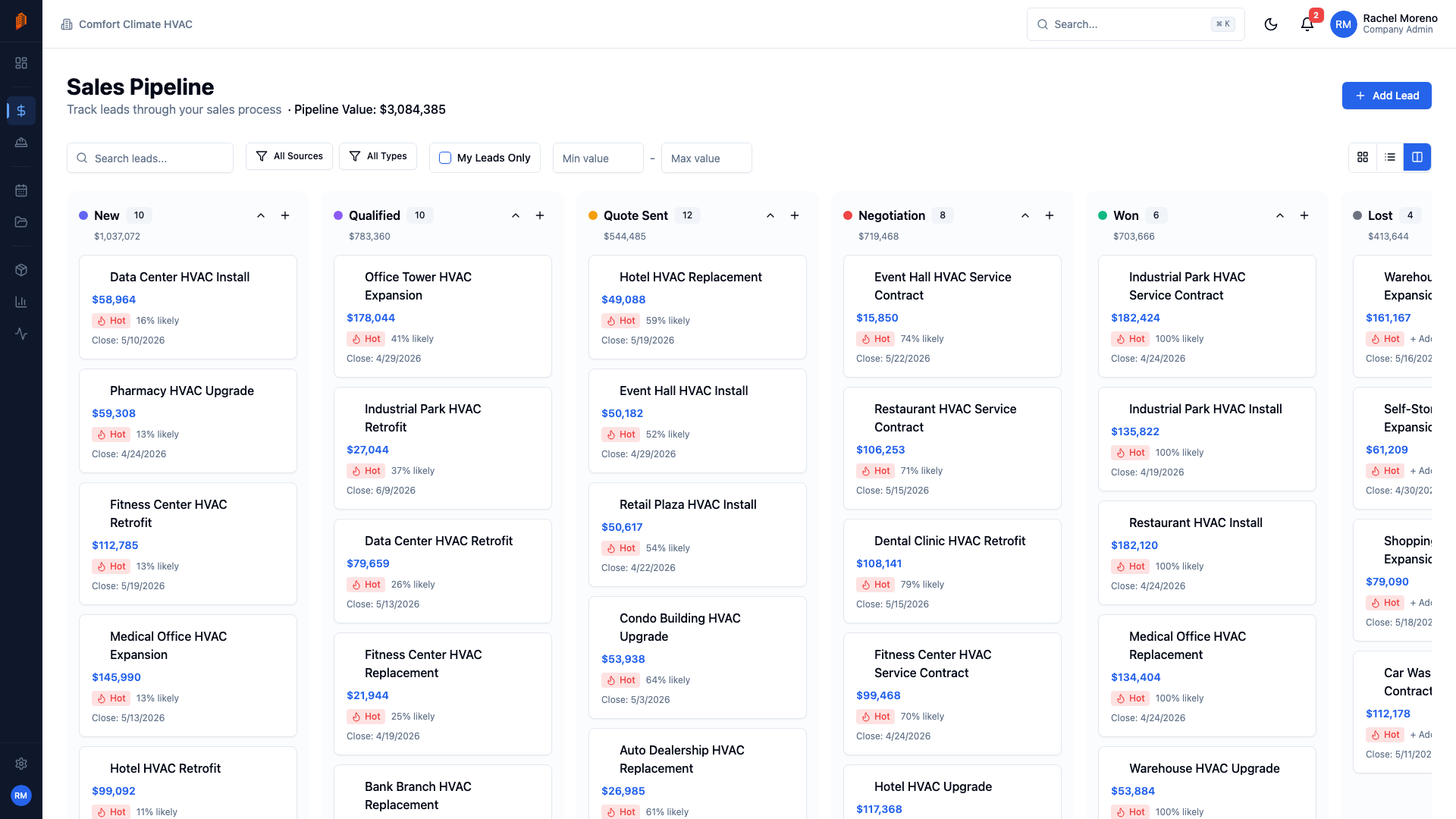
Having these stages defined means every opportunity in your pipeline has a clear status. At a glance, you know exactly where things stand. In BuildWorkPro, pipeline stages are configurable on a kanban board, and a lead converts directly into a bid once you decide to pursue it.
Contact Management for Construction
In construction, relationships drive revenue. The GC project manager you built a good relationship with three years ago is the same person sending you bid invitations today. Your CRM should help you manage those relationships.
For each contact, track:
- Company (GC, owner, architect, developer)
- Role and decision-making authority
- Projects you've worked on together
- Communication history — calls, emails, site visits
- Preferences and notes ("always wants 3 references," "prefers email over phone")
The goal is that when a GC calls with a new opportunity, anyone on your team can pull up the history and respond intelligently — even if the person who usually handles that account is out.
Follow-Up Strategies That Win Work
The bid-to-award cycle in construction can take weeks or months. During that time, the sub who follows up appropriately has a significant advantage over the one who submits and waits.
- Confirm receipt. Call or email the day after you submit to confirm your bid was received and ask if they have any initial questions.
- Check in at decision milestones. If you know the owner is meeting on Tuesday to select subs, follow up Wednesday. "Just checking in to see if there's any update on the electrical award for the Main Street project."
- Be helpful, not pushy. Offer value in your follow-ups. "We noticed an addendum came out yesterday — our number already accounts for that change" shows you're engaged and on top of the details.
- Know when to move on. If you've followed up three times with no response, note it in the CRM and shift your energy to opportunities that are progressing.
Tracking Win Rates and Learning from Losses
One of the most powerful things a CRM gives you is data on your own performance. After six months of tracking, you can answer questions like:
- What's your overall bid-to-win ratio?
- Which GCs do you win the most work with?
- What project types or sizes are most profitable for you?
- Are you bidding too much work and spreading yourself thin, or not enough?
- What's the average time from bid submission to award?
Track why you lose bids too. Common reasons include: priced too high, priced too low (yes, sometimes GCs worry about that), scope mismatch, schedule conflict, or the GC went with a preferred sub. If you're consistently losing on price in one market segment, that's a signal to either adjust your approach or focus elsewhere.
Keeping It Simple
The biggest CRM mistake subcontractors make is overcomplicating it. You don't need enterprise sales automation. You need a clean list of opportunities, a way to track where each one stands, and a follow-up date on every open deal that you actually review each week.
If your CRM takes longer to maintain than the value it provides, nobody will use it. Start with the basics: contacts, opportunities, stages, and follow-up dates. Add complexity only when you see clear value in doing so.
The subs who consistently win work aren't always the cheapest. They're the ones who show up prepared, follow up reliably, and never let a good opportunity slip through the cracks. A simple, well-maintained pipeline is how you make that happen.
Frequently asked questions
Why do subcontractors need a CRM?
Because losing track of opportunities is a visibility problem, not a sales-skills problem. Bid invitations arrive by email, due dates live on whiteboards, and follow-ups slip when the field gets busy. A CRM puts every opportunity in one pipeline so you can see what work is coming, which bids need attention this week, and which GCs actually award you work.
What pipeline stages should a construction CRM have?
Stages that mirror how subs actually pursue work: lead identified, invitation received, estimating in progress, bid submitted, under review or negotiation, won, and lost or no-bid. Construction-specific stages beat generic labels like "Prospect" because every opportunity gets a status your whole team understands at a glance.
How should subcontractors follow up after submitting a bid?
Confirm receipt the day after you submit, check in right after known decision milestones, and offer value in each touch — like confirming your number already covers a new addendum. After three follow-ups with no response, note it in the CRM and shift your energy to opportunities that are progressing.
What should a simple construction CRM track?
Contacts, opportunities, pipeline stages, and follow-up dates. If the CRM takes longer to maintain than the value it provides, nobody will use it — start with those basics, then add win-rate and loss-reason tracking once the habit sticks.
Keep reading
Construction CRM & Lead Software
Kanban pipeline for leads and deals — track contacts, follow-ups, and win rates in one place.
Learn moreBidding & Estimating
Turn won leads into detailed bids with line items, labor rates, and markup.
Learn morePipeline Stages Documentation
Customize stages and move deals through your specific sales process.
Learn moreHow to Create a Construction Bid
Once the lead is qualified, turn it into a winning bid with a proven framework.
Learn more