
Free template
Construction Letter of Intent Template
A one-page letter a general contractor sends a subcontractor to award a scope and price before the formal subcontract is signed. It releases early work up to a not-to-exceed amount, sets the start, completion and signing dates, lists the conditions, and says plainly which parts are binding.
Free · No email required · Free to use and share for your own business
Updated September 24, 2026 · Built by the BuildWorkPro team, checked on real subcontractor jobs.

What's in the template
How to fill it out
-
1
Describe the scope exactly
Reference the sub’s bid by date, the drawings and specifications it is based on, and the main exclusions. The scope in the letter should be the scope that goes into the subcontract.
-
2
State the price and basis
The agreed subcontract price and whether it is lump sum, unit prices, a guaranteed maximum or time and materials.
-
3
Release early work narrowly
If you need submittals or long-lead orders before signing, describe exactly what is released and cap it with a not-to-exceed amount. Leave the section blank if nothing is released.
-
4
Set the dates and conditions
Anticipated start and completion, the date the formal subcontract must be signed, and the date the sub must accept this letter. Check the conditions that must be met before work under the subcontract begins.
-
5
Sign, then follow with the subcontract
The GC signs and sends it; the sub countersigns to accept. When the formal subcontract is signed, it supersedes the letter and any early-work payments are credited against the price.
What a construction letter of intent is for
Subcontracts take time. The GC’s subcontract form has to be filled in, the exhibits assembled, insurance reviewed and signatures collected — while the schedule keeps moving. A letter of intent bridges that gap. It tells the subcontractor it has the job at the agreed price, so it can hold its number and its crews, and it can release the few things that cannot wait: submittals, shop drawings and orders for long-lead equipment. What it should not do is become the contract by accident.
For the subcontractor, the letter arrives at the end of the bid process described in how to bid a construction job — and the first thing to check is that its scope and price match the proposal you submitted.
Binding and non-binding parts
The template separates the two on purpose. Paragraph 1 says the letter is a statement of intent and does not bind either side to sign the subcontract. Paragraph 2 is the part that is meant to bind: the GC pays for the early work it released, at documented cost plus the bid markup, up to the not-to-exceed amount, whether or not the subcontract is signed — and the sub hands over the work product and materials paid for. Paragraph 3 makes the signed subcontract supersede the letter and credits early-work payments against the price. Paragraph 4 lets the letter lapse on the dates stated, so an award does not hang open for months.
Letter of intent, subcontract, notice to proceed
| Document | When | What it does |
|---|---|---|
| Letter of intent | After the award, before the subcontract | States the intended scope and price, releases capped early work, sets deadlines |
| Subcontract | Once terms are agreed | The binding contract: scope, price, payment, changes, insurance, lien waivers |
| Notice to proceed | After the subcontract is signed | Starts the contract time and confirms the conditions are met |
For the subcontractor, the letter is also a checkpoint. Read the scope against your own bid and proposal before you countersign: exclusions you listed in the bid should appear in the letter, because the GC’s subcontract will be drafted from it. If the letter leaves out an exclusion or rounds the price, fix it now — it is far easier than fixing it in the subcontract.
A worked example
In the completed example, Brightline Builders writes to Summit Mechanical on May 11, 2026 about the Harbor Point Medical Office, Building B. It awards the complete mechanical and plumbing scope per Summit’s April 24 bid for a lump sum of $486,200, and releases $38,000 of early work: equipment submittals and shop drawings, the purchase order deposit for the four rooftop units, and field verification of slab penetrations — no site work. The letter must be accepted by May 15 and the subcontract signed by May 18; work is expected to start June 1 and reach substantial completion November 18. Summit countersigns on May 12. The subcontract that follows is the subcontractor agreement example, and the start is confirmed by the notice to proceed.
Common mistakes
- No cap on early work, so the GC’s exposure is unlimited if the deal falls apart.
- A vague scope that does not match the bid, the scope of work, or the subcontract that follows.
- Language that reads like a contract — “you are hereby awarded and shall perform” — with no intent-only clause.
- Starting site work on a letter that only released submittals.
- No expiration date, leaving the sub holding its price indefinitely.
- Not crediting early-work payments against the subcontract price.
From winning bid to running job
In BuildWorkPro’s construction bidding you mark a bid accepted when the award comes in, then convert it into a project with its line items mapped to phases or tasks — so the scope and price in the letter of intent carry straight into the job. $79/month flat, 14-day free trial.
See bidding in BuildWorkProFrequently asked questions
What is a letter of intent in construction?
A letter from a general contractor (or owner) telling a subcontractor it intends to award them a scope of work at a stated price, before the formal subcontract is ready. It lets the sub hold its price, reserve crews and start long-lead work such as submittals and equipment orders, while the lawyers finish the subcontract.
Is a construction letter of intent legally binding?
It depends on what it says and how the parties act on it, and courts in different states treat LOIs differently. A well-drafted LOI says clearly which parts are binding — usually the early-work authorization and payment for it — and that everything else is a statement of intent only. This template does that in paragraph 1, but have an attorney review before relying on it.
What is a not-to-exceed amount in a letter of intent?
The cap on what the GC will pay for early work if the formal subcontract is never signed. The sub is paid its documented cost, plus the markup in its bid, up to that amount, and any work beyond it needs a written increase. A cap protects both sides: the GC’s exposure is known, and the sub knows exactly how much work is covered.
What is the difference between a letter of intent and a notice to proceed?
A letter of intent comes before the subcontract and says “we intend to contract with you.” A notice to proceed comes after the subcontract is signed and says “start the work now” — it fixes the date the contract time begins. On most jobs the sequence is bid, letter of intent, subcontract, notice to proceed.
Should a subcontractor start work on a letter of intent?
Only the work the letter expressly authorizes, and only up to the not-to-exceed amount. Submittals, shop drawings and long-lead purchase orders are typical; site work usually is not. Anything beyond that is at your risk until the subcontract is signed or the GC raises the cap in writing.
How long is a letter of intent valid?
As long as it says. This template has two dates: the date the sub must accept the letter by, and the date the formal subcontract must be signed by. If either passes, the letter lapses unless both parties extend it in writing — so nobody is left holding a price or an award indefinitely.
Templates that go with this one
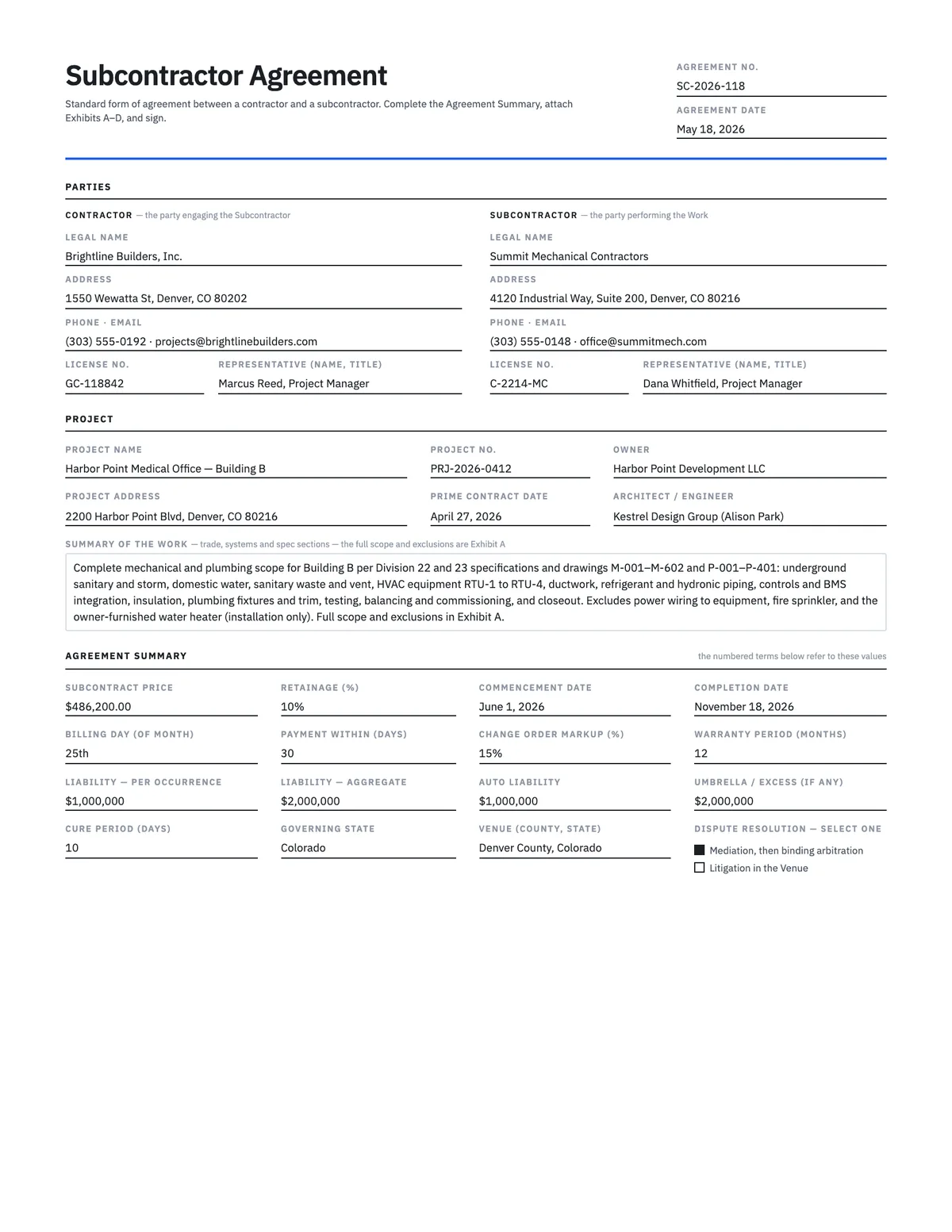
Subcontractor Agreement Template
15-section standard-form subcontract — scope, retainage, written change orders, lien waivers, insurance.
Word · PDF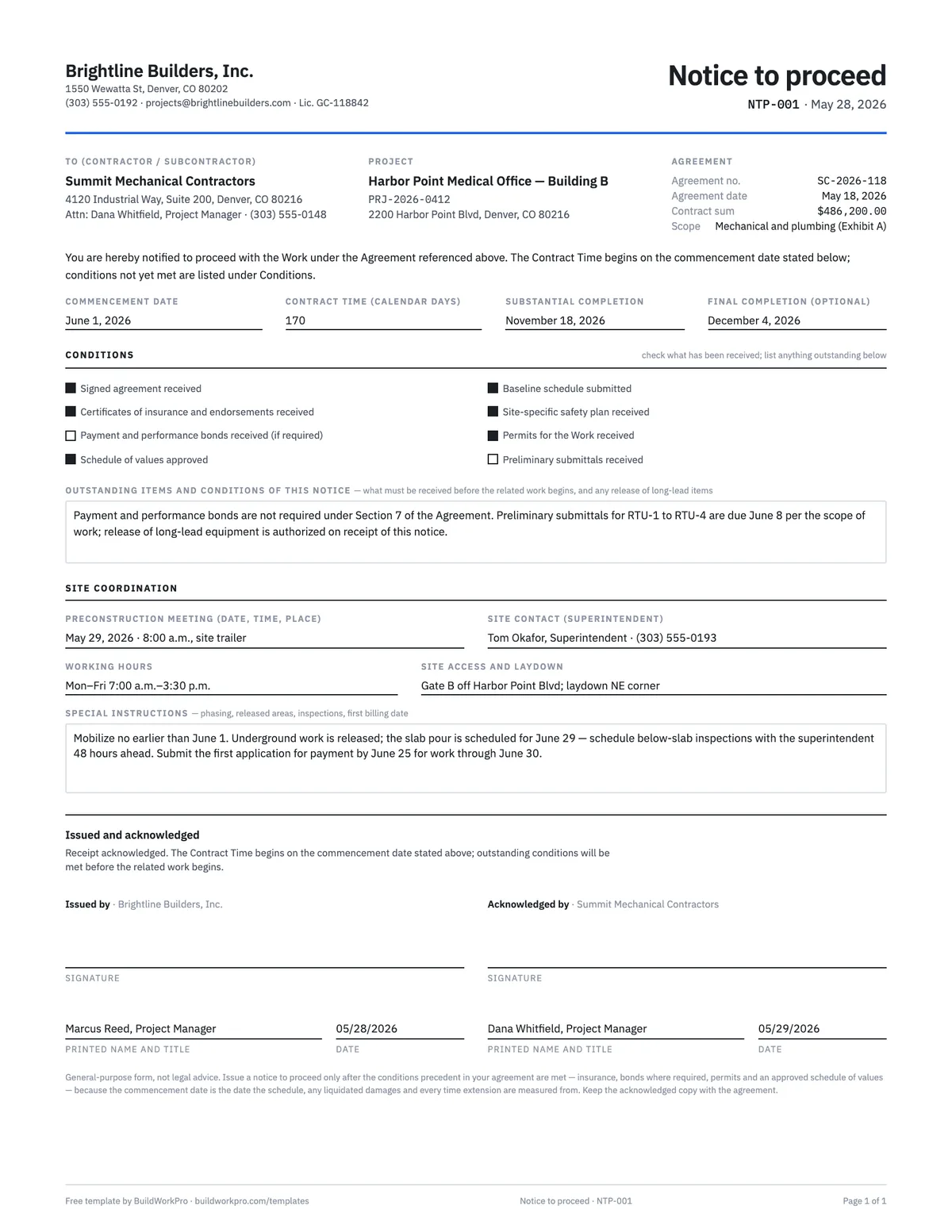
Notice to Proceed Template
Formal start authorization with the contract time clock, conditions and acknowledgment.
Word · PDF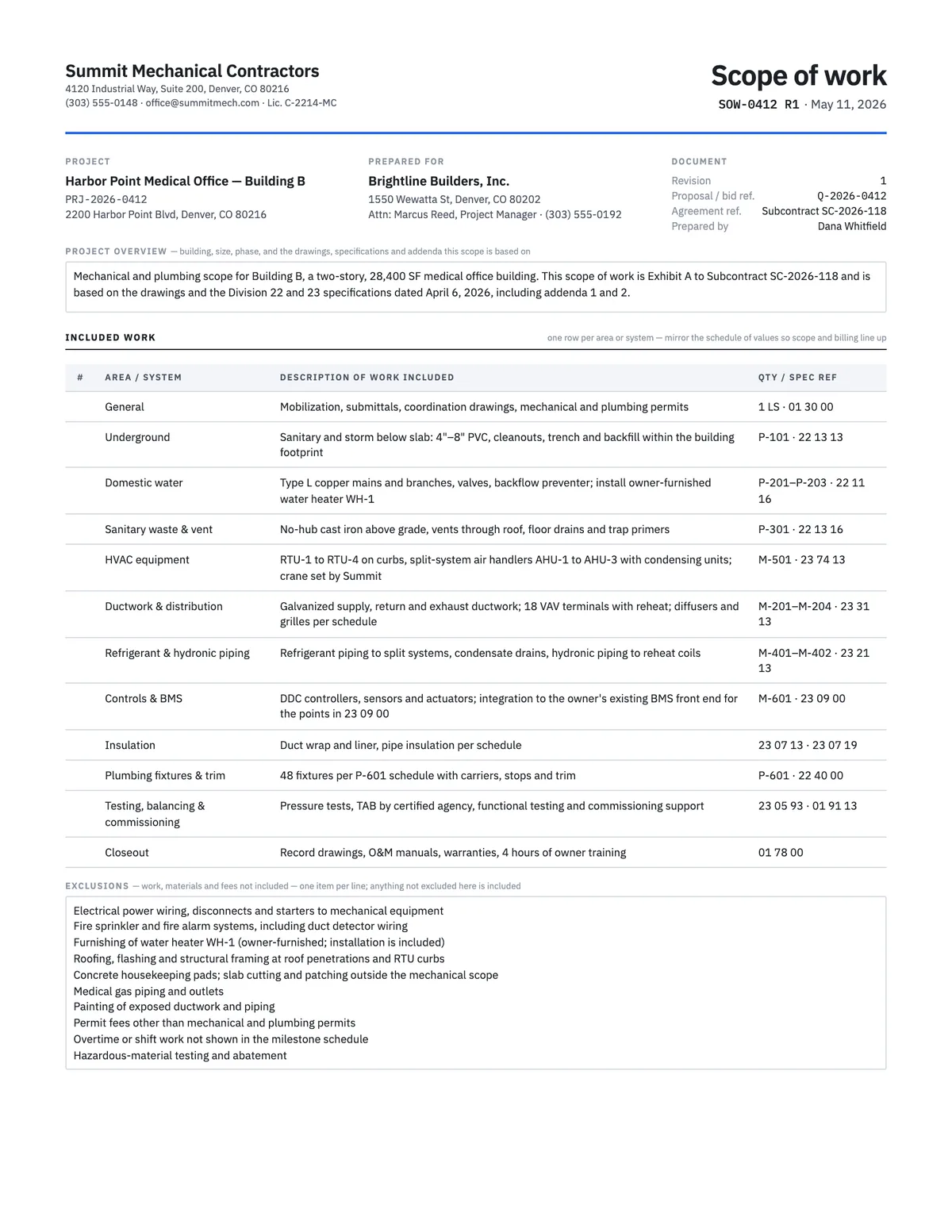
Scope of Work Template
Define exactly what is included, excluded, assumed and owed by others before anyone signs.
Word · PDF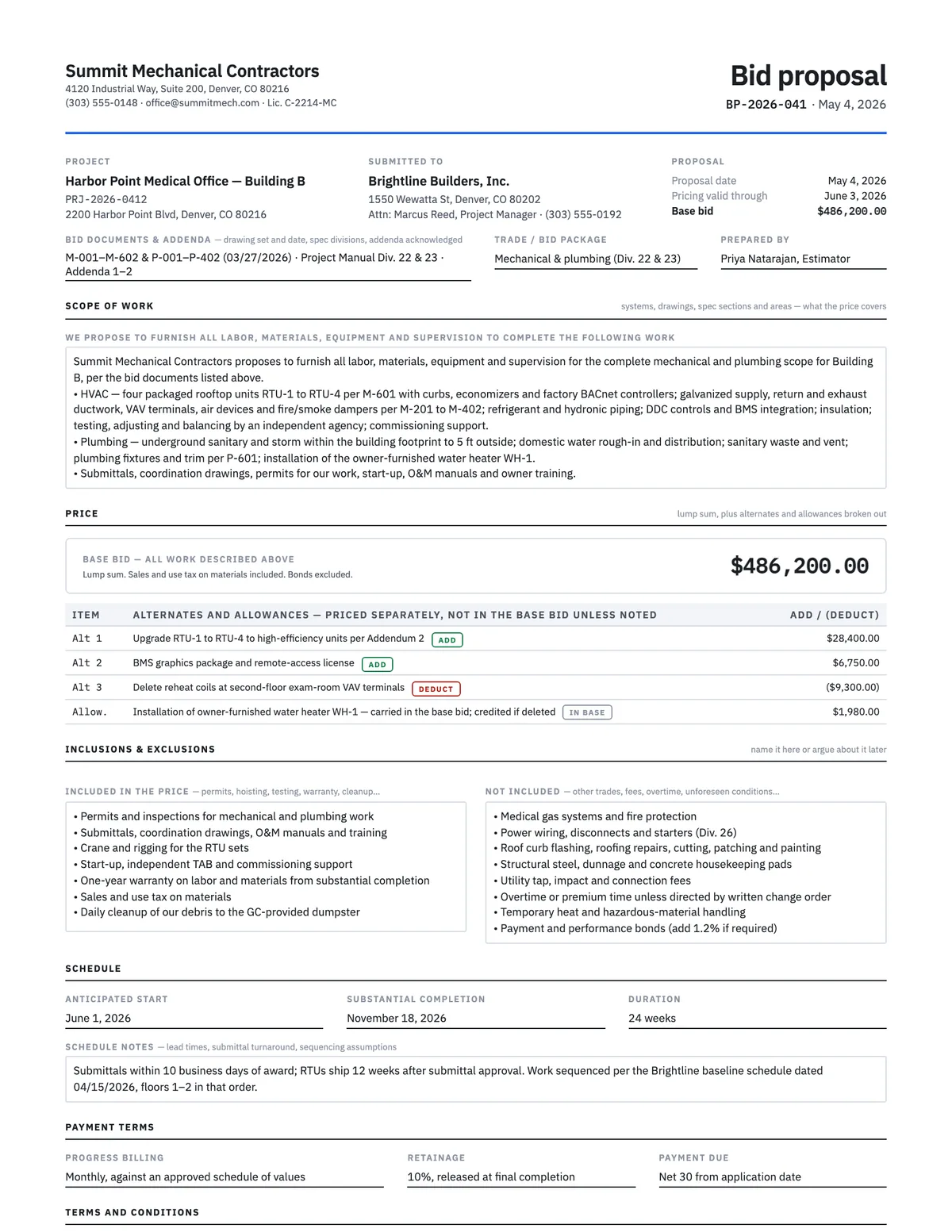
Construction Bid Proposal Template
Scope, price with alternates, inclusions and exclusions, terms and an acceptance block.
Word · PDFTurn the award into a project in one click
BuildWorkPro converts an accepted bid into a project, carrying the line items into phases and tasks, and keeps the signed letter and subcontract in the project’s documents.
$79/month flat · 14-day free trial · No credit card required
General-purpose form, not legal advice. Whether a letter of intent is binding depends on its wording, on how the parties act on it, and on state law. Keep early-work authorizations narrow and capped, and have a construction attorney review before you sign or issue a letter of intent.